01
Reversible inventory
The same material changes state through charge and discharge rather than being consumed in a one-way fuel pathway.

SuperFuel chemistry
A reversible sodium nitrite chemistry designed to separate, store, and return energy through a closed material cycle.
1,450 Wh/L · active-material energy density
Scroll to exploreReaction mechanics
Applied electricity moves ions through one planar cell, producing separated sodium and nitrogen dioxide.
Inside one planar cell
Molten sodium nitrite contains Na⁺ and NO₂⁻ ions. Applied DC power reduces Na⁺ to liquid sodium and oxidizes NO₂⁻ to neutral nitrogen dioxide.
Cathode/anode names follow the reaction and swap by mode · conceptual · not to scale
A smaller material inventory can hold the same stored energy.
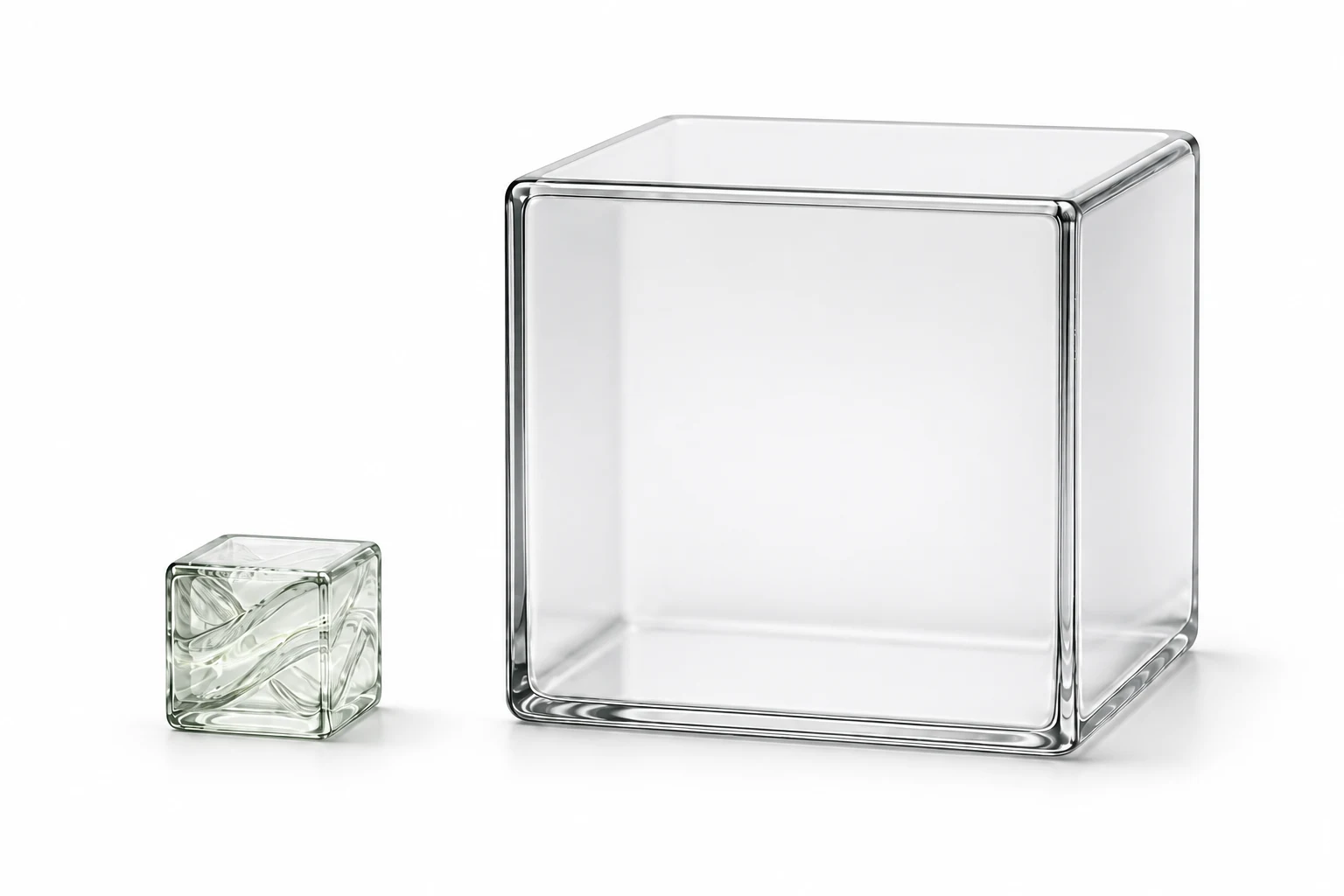
SuperFuel1 liter
Vanadium flow-battery
electrolyteAbout 36 liters
Both hold the same energy.
Illustrative comparison using 1,450 Wh/L and approximately 40 Wh/L.
Active materials and electrolyte only—not complete battery systems or installation footprints.
Why this chemistry
Separating the energy-bearing compounds from the power-producing stack opens a different design space from a sealed, fixed-format battery.
The same material changes state through charge and discharge rather than being consumed in a one-way fuel pathway.
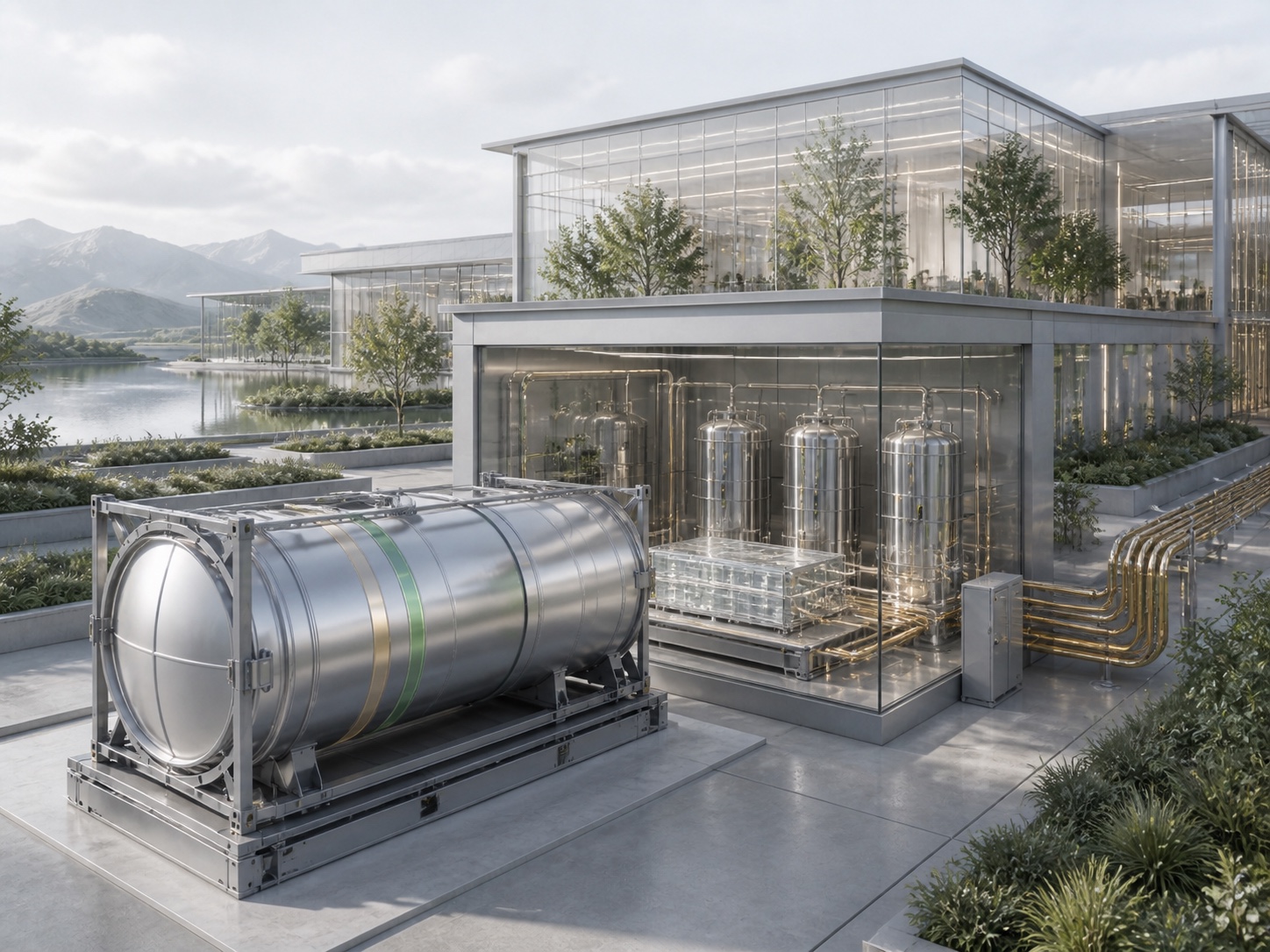
Energy-bearing reagents live outside the cell stack, allowing storage quantity to be designed separately from electrochemical power hardware.
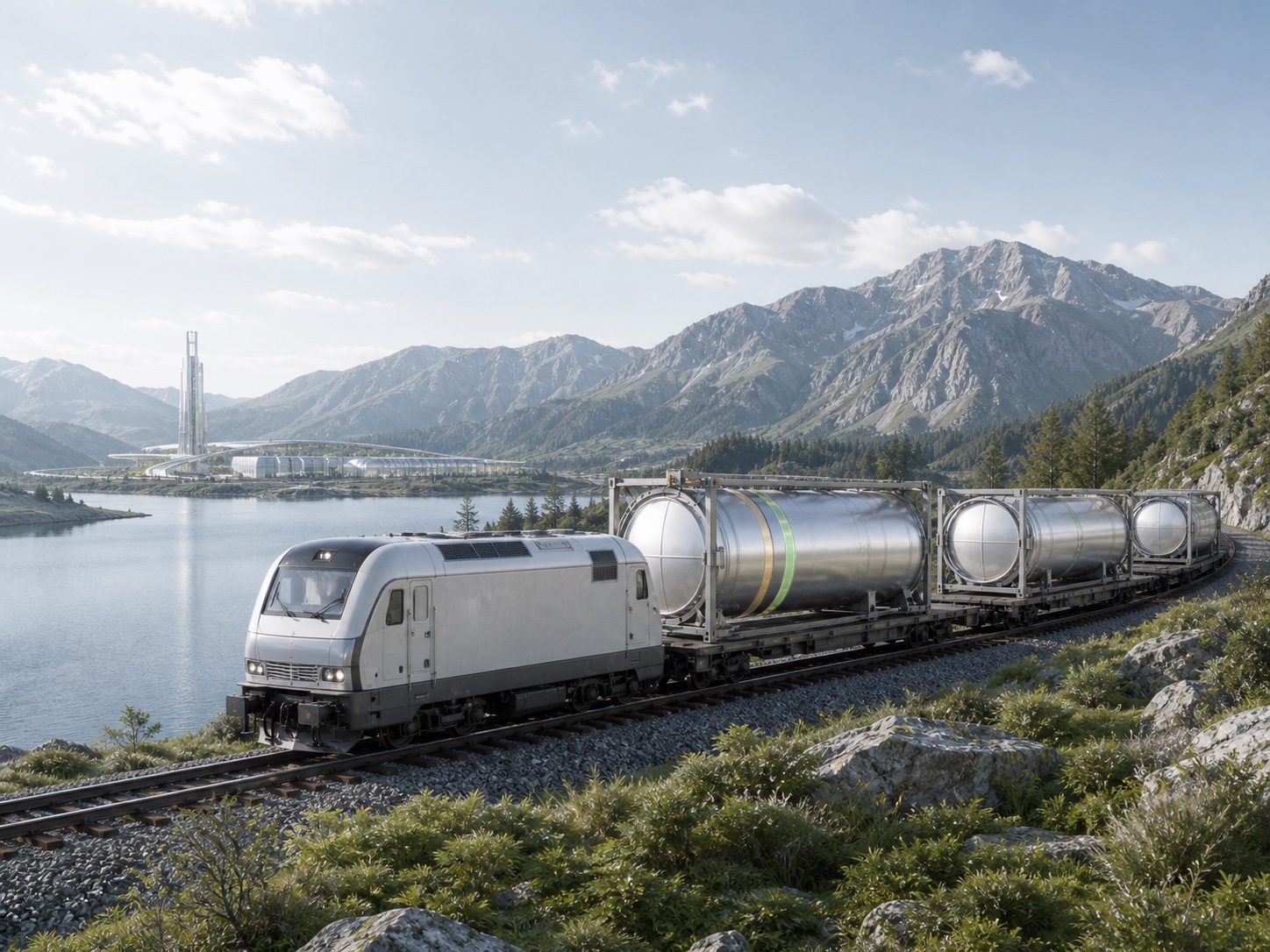
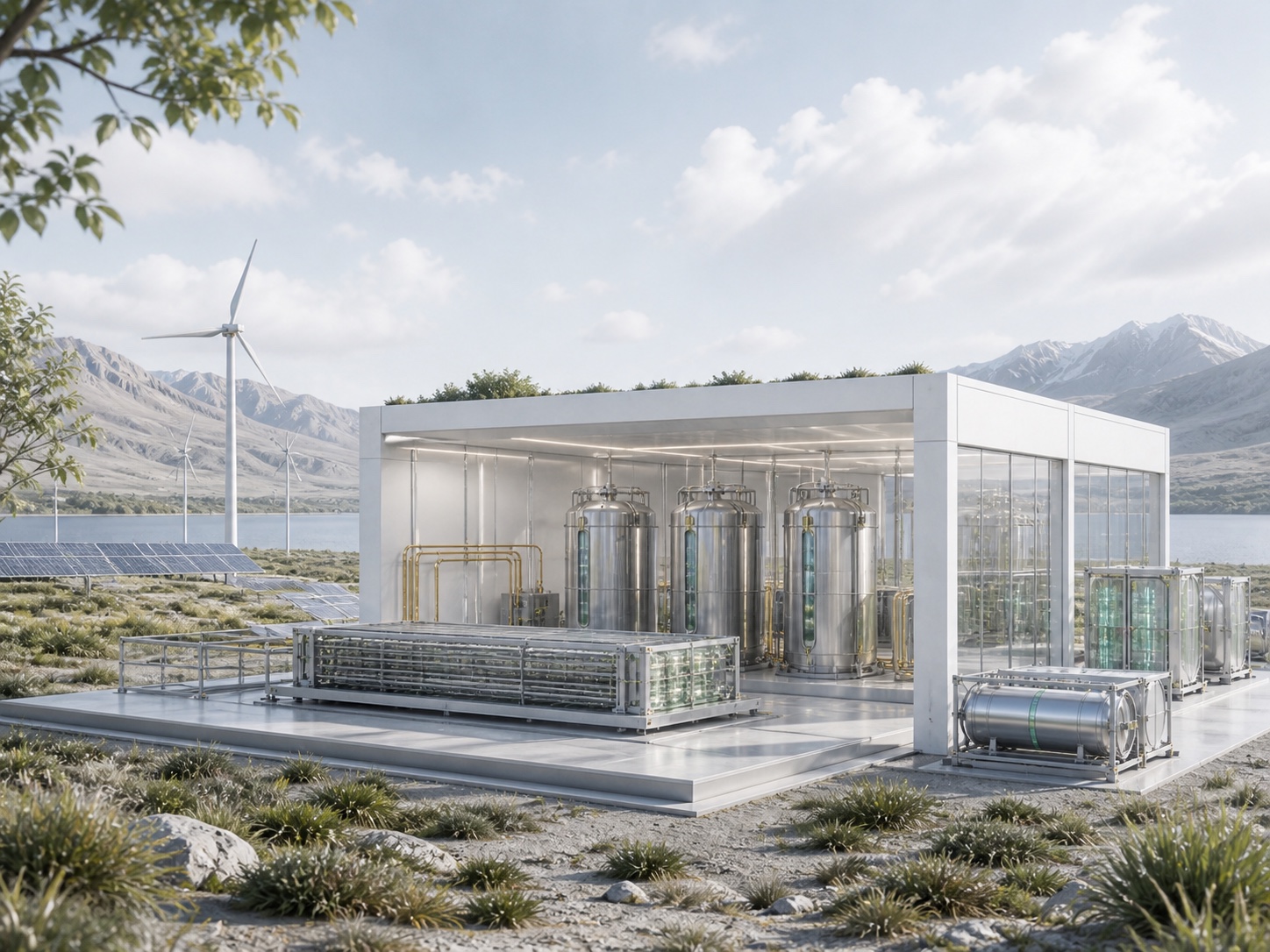
In distributed configurations, charged-state material can connect abundant generation with distant, continuous demand.
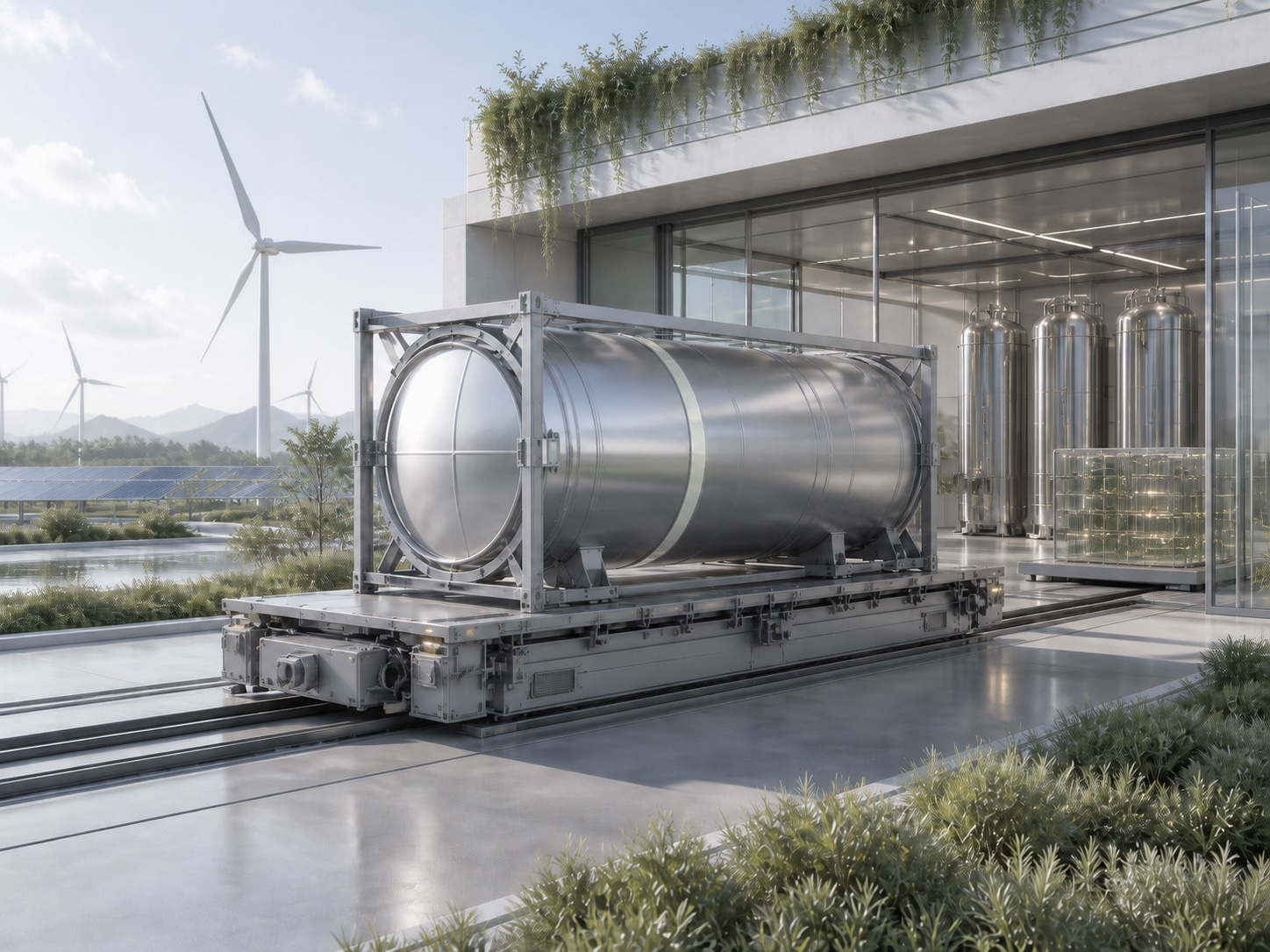
The combined material can return to renewable generation and begin another engineered cycle.
Illustrative distributed configuration · system details subject to engineering
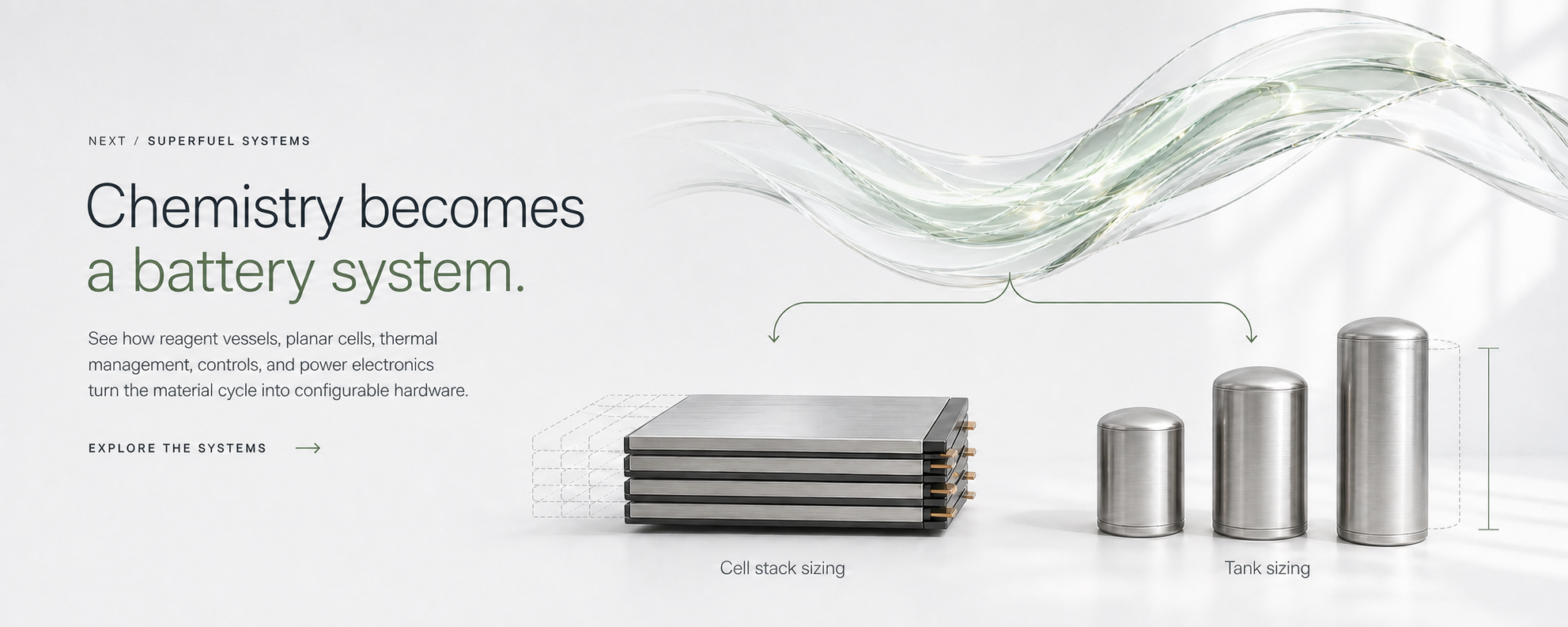
Next / SuperFuel systems
See how reagent vessels, planar cells, thermal management, controls, and power electronics turn the material cycle into configurable hardware.
Explore the systems